Serving the Greater Bay Area and Sacramento
INVENTORY
Used Pallet Stackers and Pallet Jacks for Sale
Moving pallets across the floor and lifting them into storage are different jobs. We sell used pallet stackers and pallet jacks, and we’ll help you decide which type makes sense for your loads, space, and daily workload.
Simpson Forklift is family-operated and has served the greater Bay Area and Sacramento region from Vacaville since 2006. Our approach is straightforward: Every Brand, Fair Offers, No Games. Tell us what you need to move, and we’ll talk through the equipment with you—without pushing a machine that isn’t right for the job.

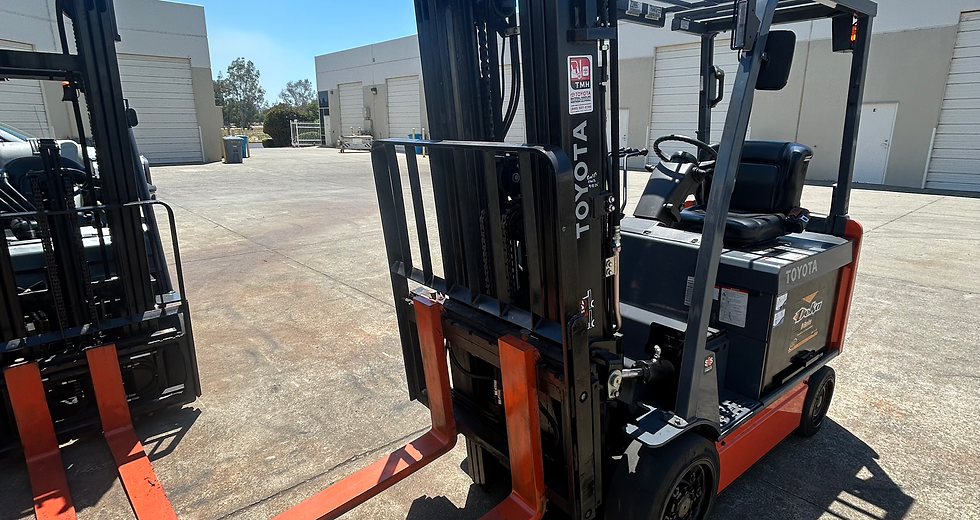
Electric pallet jack shown for illustration. Ask us about current pallet-jack and stacker options.
Pallet Jack or Pallet Stacker: Start With the Job
A pallet jack lifts a pallet just enough to move it along the floor. It can be a practical choice for moving loads between receiving, storage, and work areas when you don’t need to place them at height. Manual and powered equipment have different workload and operating considerations, so distance and frequency matter alongside load weight.
A pallet stacker raises loads for stacking or placement at height, within the limits of its configuration and rated capacity. The details matter: lift height, load dimensions, pallet design, and available clearance all affect whether a particular machine fits your work. Straddle legs, where fitted, also need room around the pallet and along the operating route.
For mixed lifting tasks, loading or unloading trucks, or yard work, a forklift may be the better fit. We can help you compare those needs with our used warehouse equipment options rather than treating every pallet-handling job the same.
Tell Us About Your Loads and Your Space
The more we know about your work, the more useful the conversation will be. Before you call, gather these details if you can:
-
The load: Typical and maximum weight, load and pallet dimensions, fork-entry direction, and whether closed pallets need to be accommodated.
-
The lift: Required lift height and where the load will be placed, including overhead and storage clearances.
-
The space: Aisle widths, turning room, and clearance for the operator and any straddle legs.
-
The route: Travel distance, floor condition, transitions, and any slopes the equipment would encounter.
-
The workload: Hours of use, frequency of moves, and charging arrangements for powered equipment.
These details help us discuss a specific machine’s configuration and limitations. A narrow footprint or a stated capacity alone doesn’t establish that it will suit your route or load.
Buying Used: Look Beyond the Machine’s Size
With used equipment, condition matters. Ask about the forks, wheels, controls, lifting operation, and known condition details. For powered pallet jacks and stackers, ask about the battery and charger. Battery condition, available operating time, charger compatibility, and the electrical supply at your site can affect whether the machine meets your daily needs. Tell us your duty cycle so we can discuss those questions in context.
Check our current inventory, then contact us to confirm current availability. If there isn’t a suitable machine listed, tell us what you need so we can discuss options.
Frequently Asked Questions
Let’s find the right equipment for your job.
Call 916-284-7559 or contact Simpson Forklift to talk through your pallet-handling needs.